

The development of alliances at all levels is at the core of how we are accelerating impact towards our 2050 vision of securing 980,000 km2 of functioning transboundary landscapes in southern Africa where people and nature live together in harmony.
Partnerships with governments, communities, and like-minded organisations have been highlights of 2024. We signed another two innovative co-management agreements with governments that bring communities on board as co-creators and decision-makers.
The first was a historic 20-year multi-party partnership agreement with Zambia’s Department of National Parks and Wildlife, the Barotse Royal Establishment, Peace Parks and WWF Zambia to co-manage the Sioma Ngwezi Management Complex. The vast 2.6-million-hectare Sioma lies within the Kavango Zambezi (KAZA) landscape, the largest transfrontier conservation area in the world. The area serves as a vital link for the largest elephant population in the world, connecting Botswana, Namibia, and Zimbabwe with the Kafue ecosystem in Zambia. The Zambian component of the transboundary landscape comprises 25% of the total area of KAZA, yet it harbours only 1.7% of the total elephant population, which stood at 227,500 animals in the 2022 aerial survey count. When elephants are provided with safe movement and access, pressure on the people and ecosystems of Botswana, Namibia and Zambia will be significantly decreased.
The second was a first-of-its-kind Memorandum of Understanding in South Africa with Ezemvelo KZN Wildlife and the Tembe Traditional Authority in conjunction with the Tembe Community Trust, to explore the feasibility of rolling out a model of co-management in this landscape. This lays the foundation for a long-term collaborative management agreement for Tembe Elephant Park in KwaZulu-Natal, South Africa, which is one of the 35 biodiversity hotspots in the world. We are deeply grateful to Rio Tinto for their generous funding support.
The Government of Malawi and Peace Parks Foundation signed a 20-year agreement to co-manage Nyika National Park and Vwaza Marsh Wildlife Reserve in 2023. Nyika is an incredibly important park that produces an estimated 10% of all the freshwater runoff to Lake Malawi. More than 10 million people are dependent on this lake for their livelihoods, so Peace Parks is deeply committed to ensuring this ecosystem remains healthy.
This year has seen the Nyika Vwaza Co-management Trust constituted, with trustees from the Government of Malawi represented by the Department of National Parks and Wildlife, along with district administrators, the communities, Peace Parks, and the private sector. A Malawian CEO will run the trust with technical and financial support from Peace Parks. This park management and development structure is a model with a lot of potential for scalability and replicability.
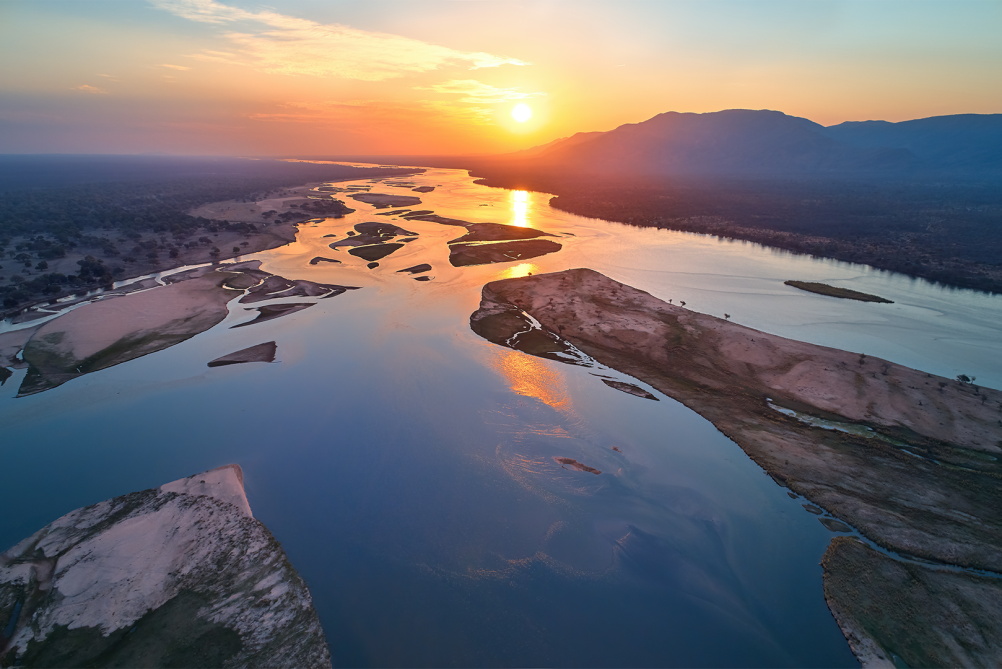
We are also working with the Zimbabwean Government in the Greater Mana Pools Ecosystem as a co-management partner. Although it is early days, the building blocks of what this partnership will look like are coming into place with a number of successful assessments completed this year. Through this partnership, we will develop a structure that professionalises park management and provides a platform for investment by the private sector and the donor community.
The Herding for Health programme, founded jointly by Conservation International and Peace Parks, continues to go from strength to strength. We are working together on meaningful, scalable interventions throughout southern Africa that are seeing cattle farming contributing to restoring rangelands, providing income for thousands of people and mitigating conflict between wildlife and people. Our target is to, by 2030, reach 100,000 km2 of land. The programme is operating in seven countries and has improved 15,000 km2 of rangeland.
To date, 18 167 game animals representing 27 different species, have been relocated to protected areas being restored in partnership with governments, the donor community, wildlife professionals and NGOs. This year, three spotted hyena were released in Maputo National Park. We are proud of the fact that, based on population growth models and aerial surveys, the translocated animals have grown to more than 100,000 animals directly contributing to restoring functional ecosystems, biodiversity and mitigating climate change.
Our 2030 target is to secure 680,000 km2 of transboundary landscapes throughout southern Africa and to improve the resilience and livelihoods of 289,000 people living in and around those areas. To this end, Peace Parks launched the Partners4Nature Fund which aims to raise USD100 million for transboundary conservation by 2027 with the first USD40 million already secured. We are immensely grateful to the founder donors who made this possible and excited about the possibilities to attract more like-minded partners to these landscapes in order to accelerate impact, at scale.
All of this would be impossible without our community of governments, people living in the landscapes, partners, donors and the dedicated Peace Parks team. Thank you for all you do to secure a future where people and nature can co-exist in harmony.
Best wishes for 2025,
Werner Myburgh
