

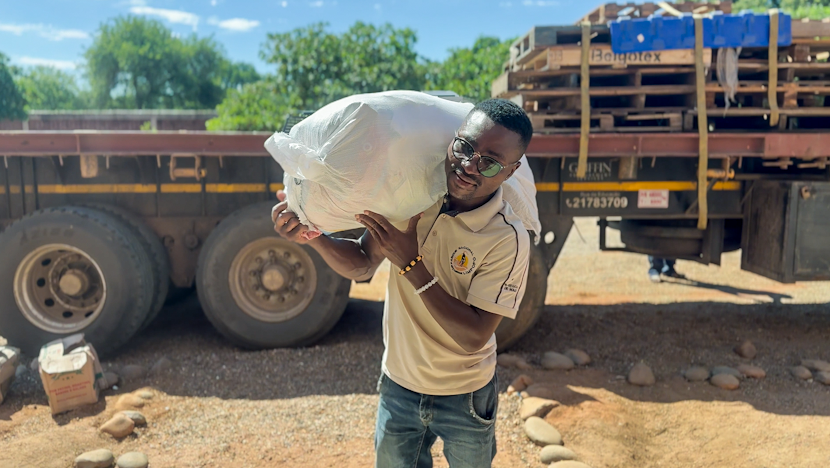
When Stephen Wright took up his new post as Peace Parks Foundation’s Head of Operations and Development at Limpopo National Park in September last year, he could not have foreseen the test that he and his team would face just a few months later.
Extremely heavy rainfall from late December caused severe flooding across southern Mozambique, cutting off more than 27,000 people living in villages in and around the park. Within weeks, the Mozambique government declared a state of emergency and appealed for support.
Peace Parks was in a unique position, with strong partnerships not only in Mozambique but also across the borders. Wright and his team mobilised quickly – demonstrating how critical strong partnerships are when a crisis hits.
In the village of Malhangalene, many families lost everything.
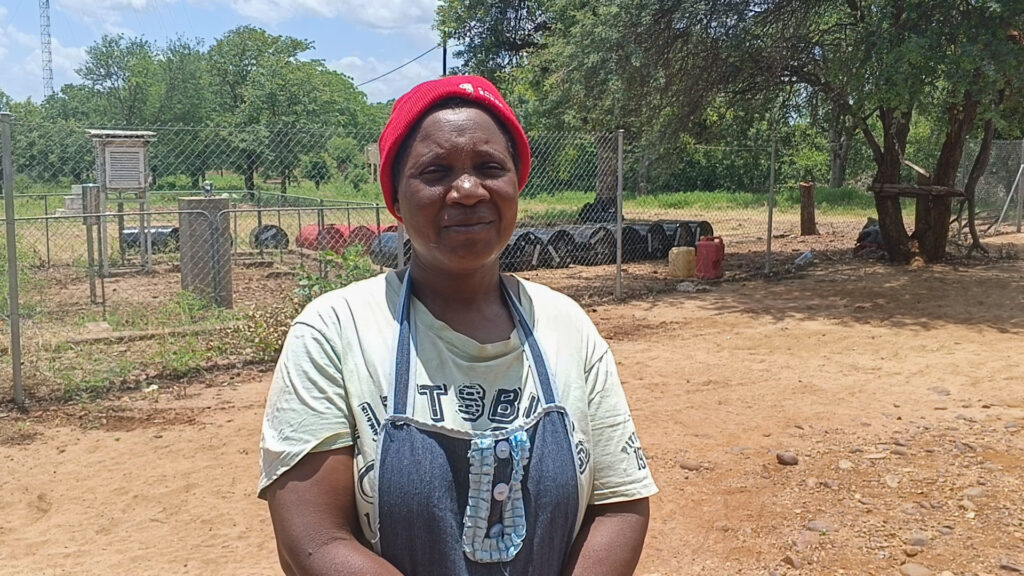
“The roads are destroyed,” said Ana Arao Zile, a Malhangalene resident. “We cannot reach Mapai or any other place where we could get food or other supplies. The floods took the food we had in our fields and destroyed our houses. None of our belongings survived.”
Mobilising an emergency response
“The government’s ability to respond in this remote area was severely limited, especially given all the issues they had further downstream,” said Wright.
Because the Limpopo National Park team – supported by Peace Parks Foundation – had good capacity on the ground, they were able to act immediately. In close contact with the four surrounding district authorities and using the park’s four-by-four vehicles and helicopter, the team carried out a rapid assessment of the damage and the most urgent community needs.
“The roads within the park and its buffer zone, where the majority of the communities are based, were severely damaged and bridges were washed away. Fixing them is essential,” he added.
Restoring access to communities
Restoring mobility became the top priority. Communities needed access to food supplies, the ability to transport the sick or injured to health facilities, and to sustain their families’ livelihoods.
Peace Parks coordinated relief efforts in close collaboration with the Mozambique Disaster Relief Agency (INGD), the district’s infrastructure department and Karingani, our main partner on the ground.
“The government is guiding us as to what the priorities are – which bridges and which road sections need to be fixed first,” Wright explained.
Karingani contributed towards logistics, particularly air support during the early stages when no road access was possible. They also provided labour, a tractor and facilities at Massingir for storage and sorting.
A lifeline for communities
Peace Parks has mobilised more than $1 million for the flood response, securing machinery, labour and fuel. Local citrus producer Verdant Citrus helped repair parts of the main road to Giriyondo, making it passable again, a crucial step that enabled the delivery of 40 tonnes of aid from South Africa.
To date, donations have enabled Peace Parks to purchase 113 tonnes of food. Of this, 67 tonnes have already reached 46 villages around Limpopo, Zinave and Banhine national parks, supporting more than 4,300 families, with a further 46 tonnes ready for delivery.
One of the more remote villages reached was Malhangalene, where food parcels were distributed to families.
“The park helped us and although it is not a lot, it will allow us to sustain ourselves for a few days. We are very grateful,” Zile said.
A team stretched but standing strong
For the relief team on the ground, the work is far from over.
“I am proud of the Limpopo National Park team, who have pulled together under very difficult conditions,” Wright said. “Leading this response is exhausting physically, emotionally and mentally, but it feels good to be part of an operation that is helping people in need.”
Donate to support our relief efforts: bit.ly/4kzojCR
