

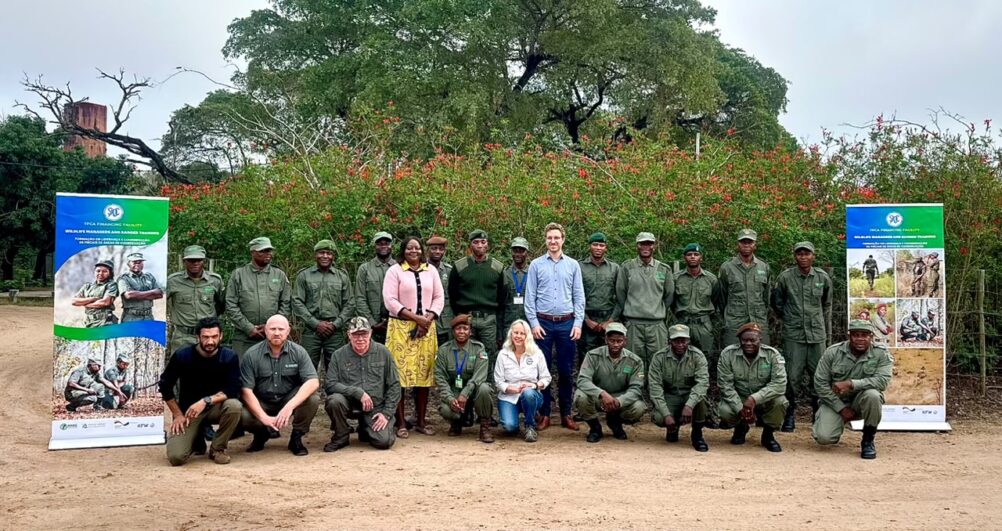
The Administração Nacional das Áreas de Conservação (ANAC), in partnership with the Southern African Development Community (SADC), the Government of Germany and Peace Parks Foundation, is strengthening leadership across four national parks through a targeted development programme for 43 current and emerging protected area leaders. Collectively, these participants oversee approximately 378 rangers responsible for protecting some of southern Mozambique’s most important, protected areas.
The initiative supports Banhine, Limpopo and Zinave national parks within the Great Limpopo Transfrontier Conservation Area, as well as Maputo National Park within the Lubombo transboundary landscape. Together, these landscapes connect protected areas across Mozambique, South Africa and Zimbabwe, including Kruger and Gonarezhou national parks.
The initiative is funded by the German Government through SADC’s Transfrontier Conservation Area Financing Facility (TFCA FF), which supports SADC member states in transboundary conservation. Germany’s contribution focuses on building the leadership and technical capacity of wildlife rangers and managers to reinforce biodiversity conservation, improve responses to human-wildlife conflict and support sustainable livelihoods. The TFCA Financing Facility is implemented by KfW Development Bank and the International Union for Conservation of Nature (IUCN).
“This programme demonstrates how SADC member states can work together to increase conservation capacity and share expertise across borders.” Ndapanda Kanime, Senior Programme Officer, Responsible for Natural Resources and Wildlife, SADC Secretariat.
Two complementary training streams will be delivered as pilot programmes under the Wildlife Ranger and Managers Training Programme, which will then be expanded across the SADC region.
In 2025, ANAC invested in the recruitment and foundational training of more than 100 new rangers, which included a high proportion of women and post-school-qualified recruits. This has bolstered overall ranger capacity and created an opportunity to further build leadership, supervision and coordination within and across protected areas.
“IUCN is working closely with SADC Member States to pinpoint key training needs in each TFCA to ensure that the Wildlife Ranger and Managers Training Programme effectively boosts conservation efforts in TFCAs at all relevant levels. In this first pilot training, ANAC has identified two complimentary training streams which will be delivered in July and October.” Domingos Gove, Country Director Mozambique, IUCN.
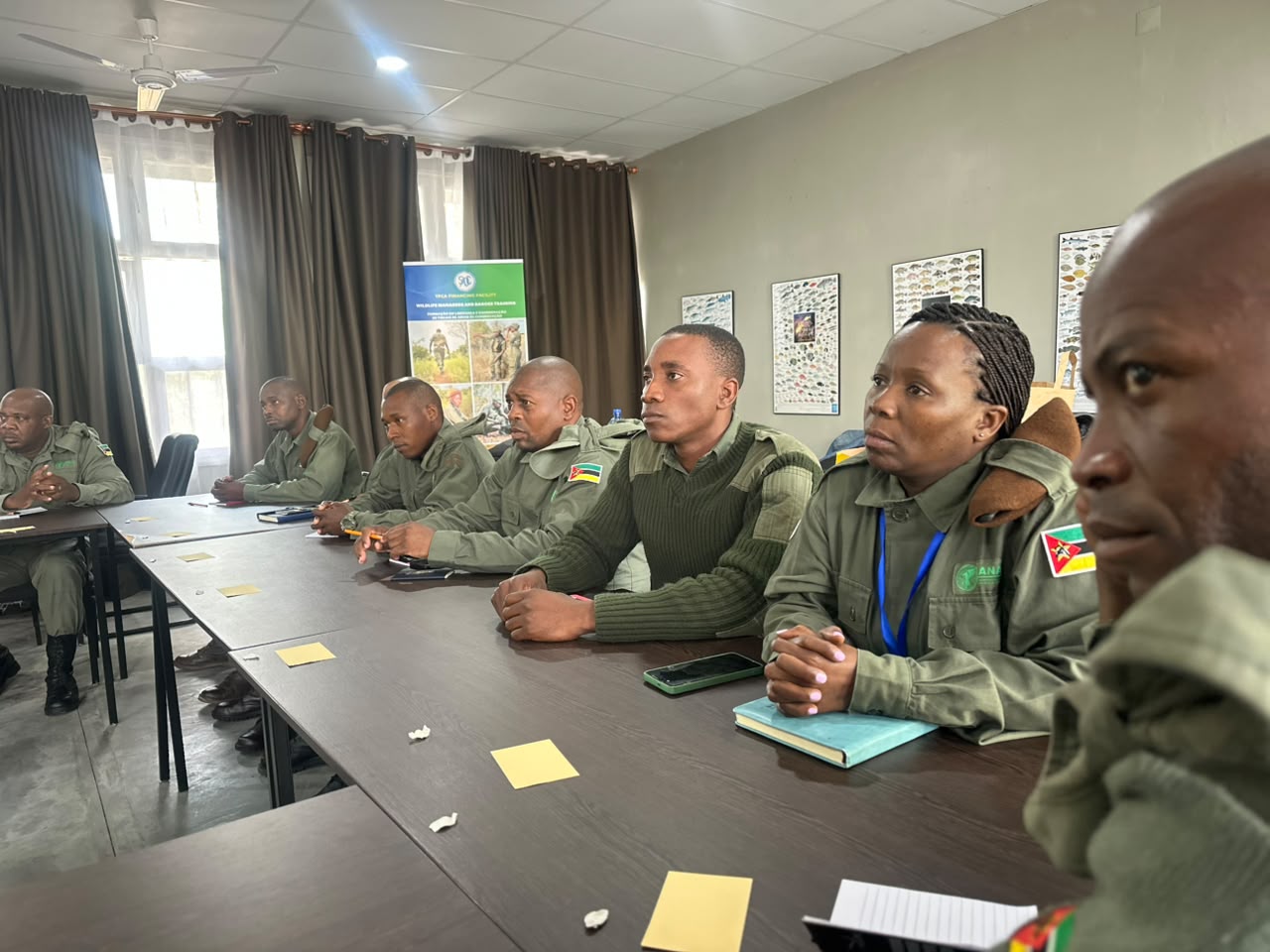
The Protected Area Management course will foster leadership, law enforcement strategy and management oversight among senior conservation staff from the participating parks. Colleagues from Gonarezhou National Park in Zimbabwe will also take part, supporting cross-border learning and collaboration. The Brave-Heart Leadership programme will equip 26 emerging section and regional ranger leaders with the skills needed to supervise patrols and lead operational teams. Participants represent around 40% of the parks’ existing patrol leadership.
“Strong conservation depends on more than ranger numbers. It depends on capable leaders who can mentor teams, coordinate operations and make sound decisions in demanding field conditions. Investing in leadership helps ensure that the gains made through ranger recruitment translate into stronger protected area management.” Antony Alexander, Regional Manager, South for Peace Parks Foundation.
Beyond strengthening individual protected areas, the programme supports regional commitments under the Great Limpopo Transfrontier Park Treaty and SADC’s Transfrontier Conservation Area Programme by promoting more consistent approaches to wildlife protection and law enforcement across international borders.
“As protected areas become more complex to manage, investment in leadership, accountability and ranger capacity will be critical to ensuring effective conservation outcomes across southern Africa’s transboundary landscapes. This intervention is indicative of Germany’s commitment to conservation, through extensive investments in transboundary landscapes. – Gabriele Bennemann, German Special Representative to SADC, German Embassy Gaborone.
