Lower Zambezi-Mana Pools Transfrontier Conservation Area established in 2023
Peace Parks has been assisting with the facilitation of cross border dialogue that led to the Governments of Zimbabwe and Zambia signing a ground-breaking Memorandum of Understanding in May 2023, formally establishing the Lower Zambezi-Mana Pools Transfrontier Conservation Area.
The agreement embodies a powerful commitment to enhanced cross-border protection, demonstrating international cooperation and synergy in the face of ongoing global environmental challenges.
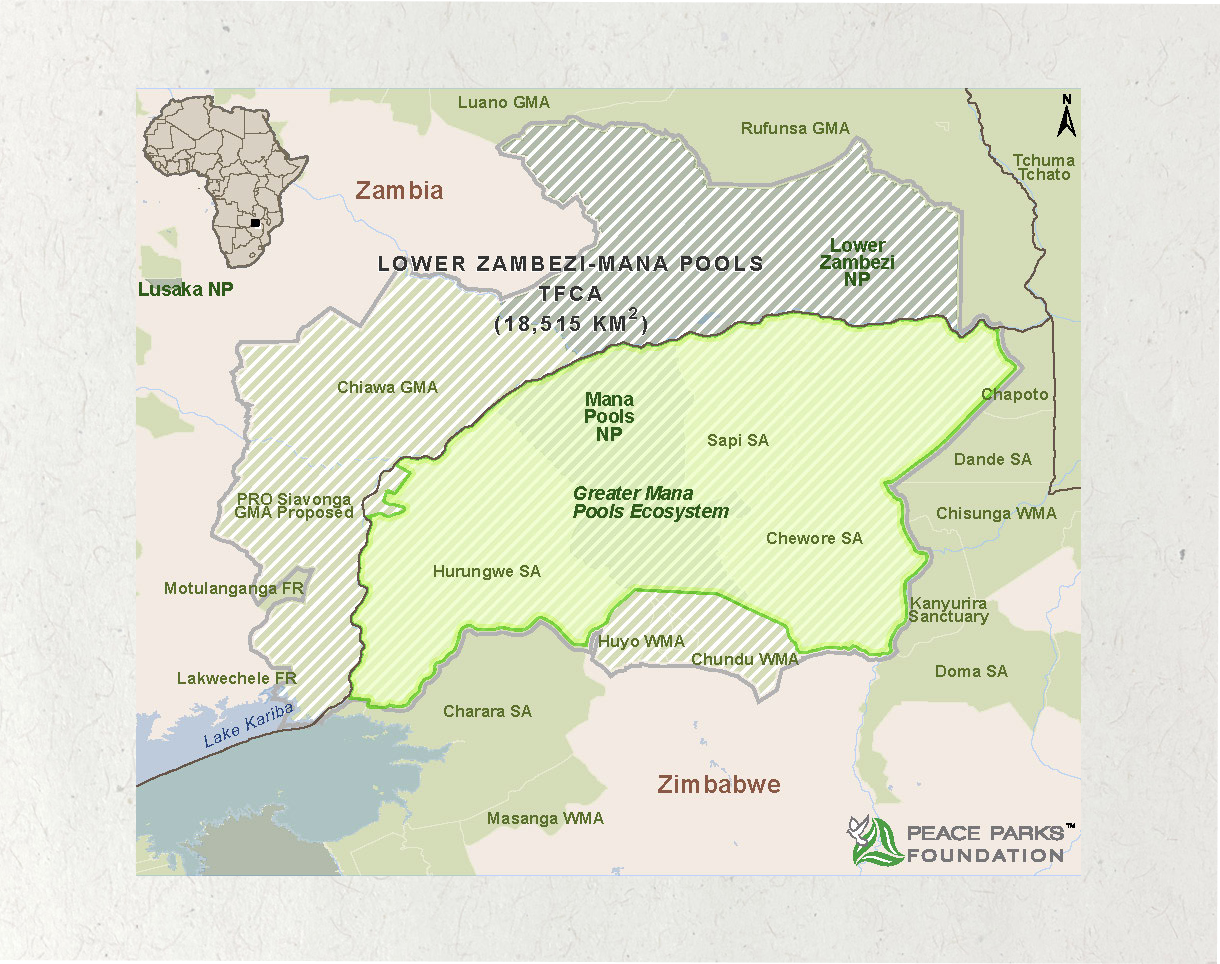
Measuring 18 515km², the Lower Zambezi-Mana Pools transboundary landscape is composed of the 4 092 km2 Lower Zambezi National Park in Zambia, and the 2196 km2 Mana Pools National Park in northern Zimbabwe, with the mighty Zambezi running through its centre.
It is a massive wildlife sanctuary straddling a mighty river, a mosaic of game and safari management areas, communal land and conservancies. The Zimbabwe component is also a proclaimed World Heritage Site with unimpeded movement of wildlife throughout the area.
OUR WORK
Conservation at scale
The formalisation of the transboundary area signifies the mutual resolve of the two governments to advance a partnership that enables better management of shared resources and the associated challenges through a regionally integrated approach as defined by the South African Development Community Transfrontier Conservation Area framework. It highlights a critical need for cooperation to protect unique ecosystems and to cultivate a robust, sustainable wildlife economy across a landscape unfettered by national boundaries.
Mana Pools
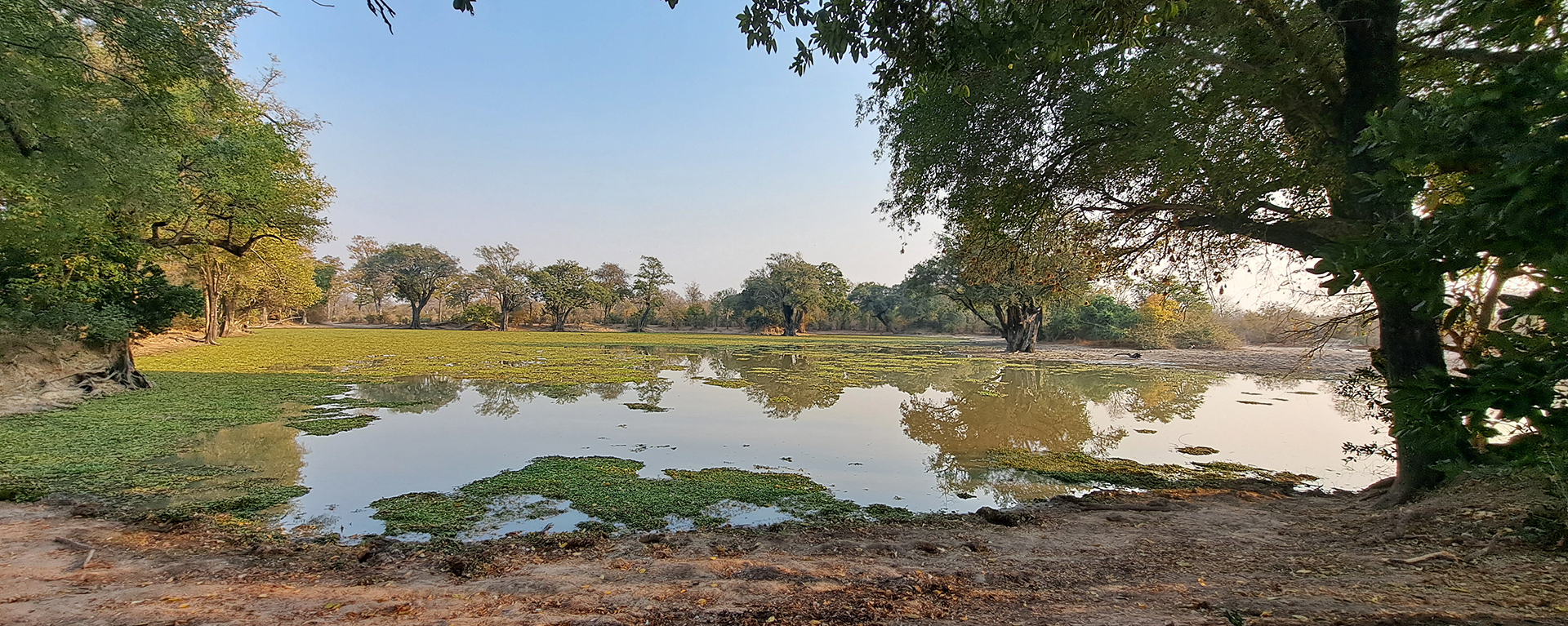
Mana Pools is a World Heritage Site based on its wildness and beauty. Mana means ‘four’ in the local Shona language and refers to four large permanent pools left behind by the Zambezi River. These pools, designated as a Ramsar Wetland of International Importance in 2013, are the remnant ox-bow lakes that the River carved out thousands of years ago as it changed its course. Hippo, crocodile and a wide variety of aquatic birds are associated with the pools.
Spread across 18,515 km² of the Zambezi River basin below Lake Kariba, the transboundary landscape embraces core conservation territories including the Lower Zambezi National Park in Zambia and Mana Pools National Park in Zimbabwe, in addition to a mosaic of game and safari management areas, communal land and conservancies. The Zimbabwe component is also a proclaimed World Heritage Site with unimpeded movement of wildlife throughout the area
Rewilding
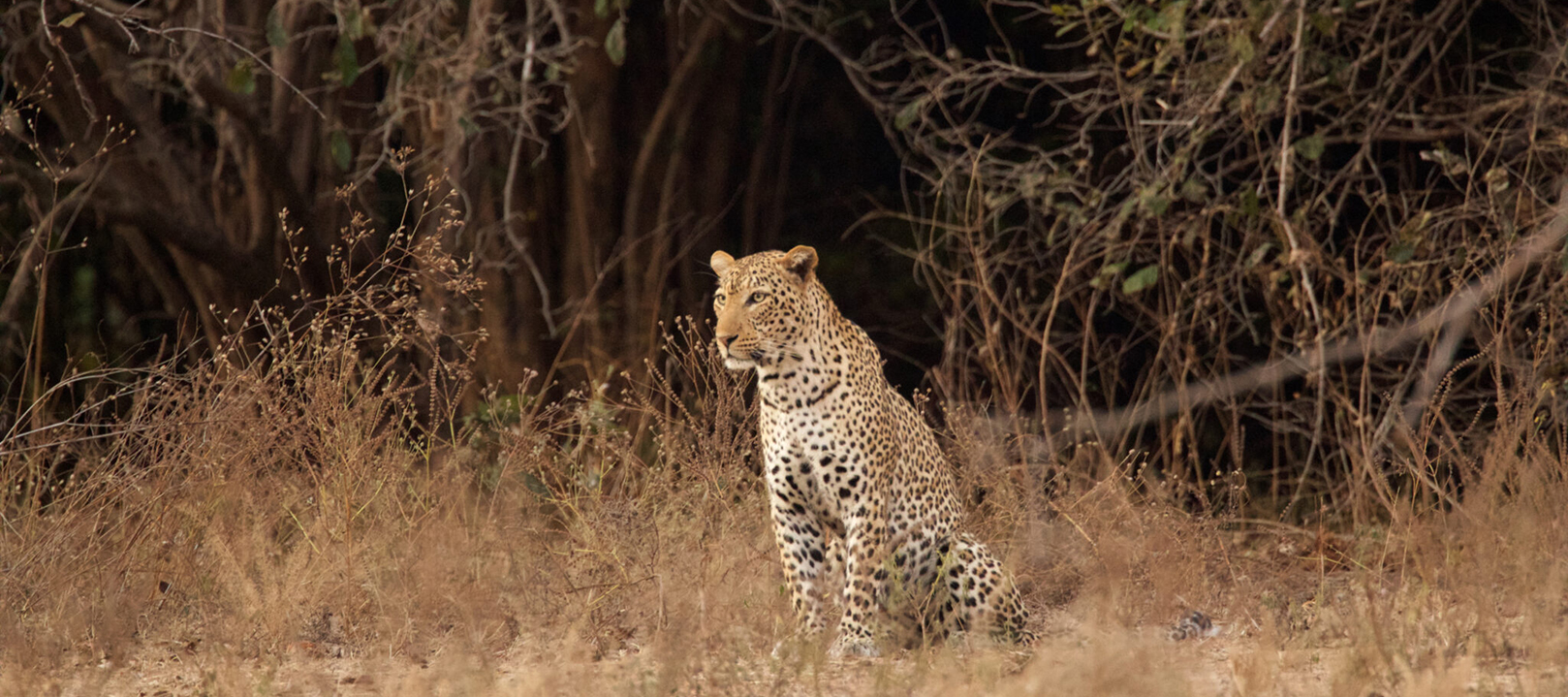
Portrait of leopard (Panthera pardus), Mana Pools National Park, Zimbabwe
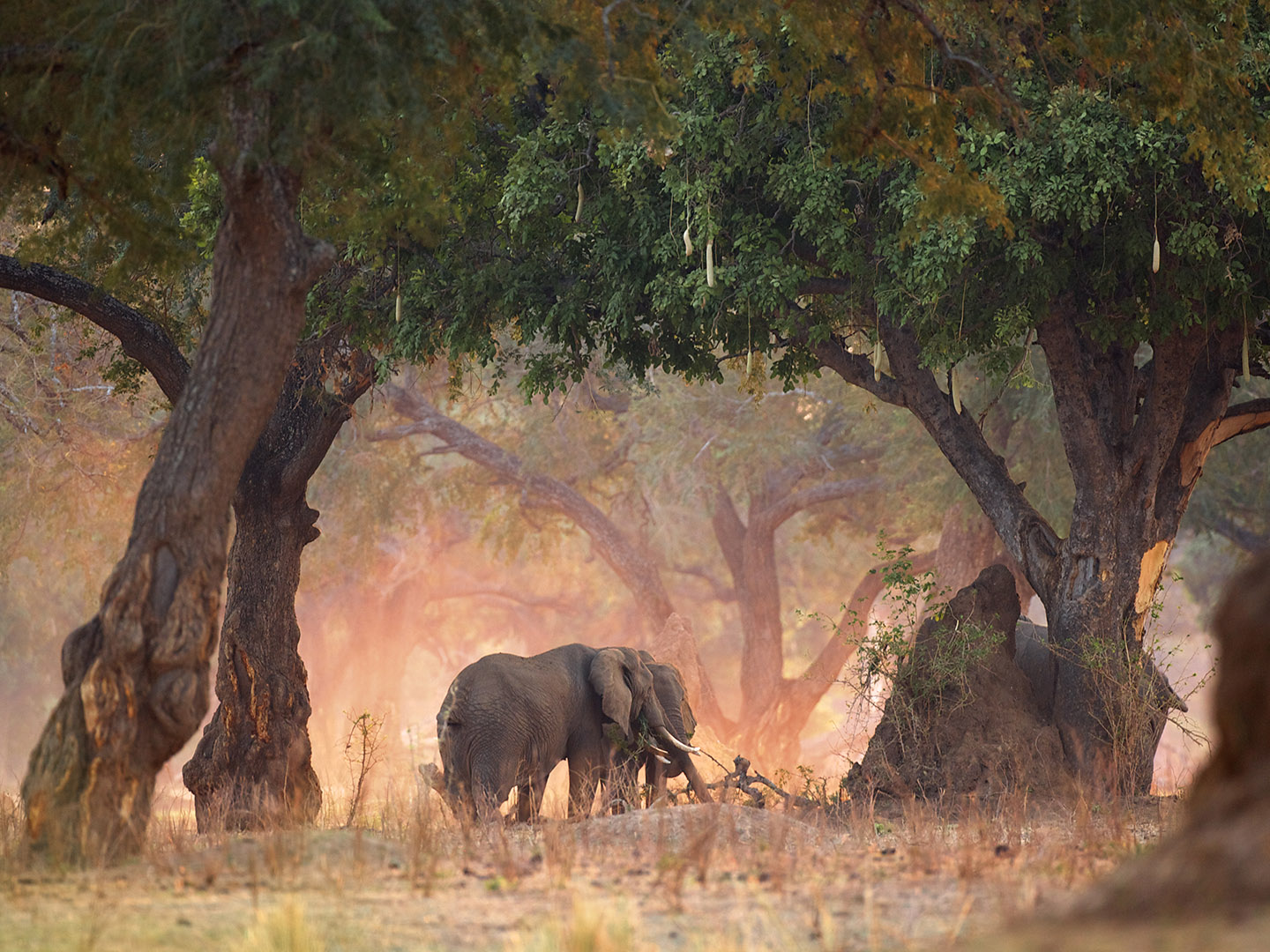
In this landscape our focus is to enhance ecosystem integrity and natural ecological processes by harmonising environmental management procedures. There is a wide range of large mammals in the area including elephant, buffalo, hippo and crocodile. Predators are attracted to the game and the floodplain boasts over 450 bird species
Combatting wildlife crime
Although this was once a stronghold of the magnificent black rhino and elephant, their numbers were decimated due to fierce and sustained poaching over many years. As part of a larger strategy to support the governments of Zambia and Zimbabwe with effective joint law enforcement in the Lower Zambezi-Mana Pools landscape, Peace Parks Foundation assisted The Tashinga Initiative in 2018 with funding to complete the construction of a brand new anti-poaching operations and communications centre in the Mana Pools National Park.
Wildlife crime is an extremely complex problem that requires multiple levels of intervention to solve. It is well-known that there are three critical components any anti-poaching strategy depends on: software, hardware and the human beings that operate them. At the Lower Zambezi Anti-Poaching Operations Centre much attention has been paid to promoting a sense of pride and camaraderie among the rangers who are the custodians of the area.
Community development
The transboundary landscape not only ensures the protection of a diverse array of wildlife habitats, ranging from islands and riparian forests to inland woodlands and grasslands, but also creates ample opportunities for the local, rural communities who often have limited access and choice with regards to income streams.
Communities empowered to engage in tourism activities and wildlife conservation are the first line of defence in conservation; for an approach and an impact to be sustainable, it is essential to ensure that local people experience tangible benefits from decisions and developments. Existing initiatives
Svenska Postkod Lotteriet, the Swedish Postcode Lottery, has been steadfastly supporting the conservation efforts of Peace Parks Foundation since 2010.
This website or its third party tools use cookies, which are necessary to its functioning and required to achieve the purposes illustrated in the cookie policy. If you want to know more or withdraw your consent to all or some of the cookies, please refer to the cookie policy
. By closing this banner, clicking a link or continuing to browse otherwise, you agree to the use of cookies.