

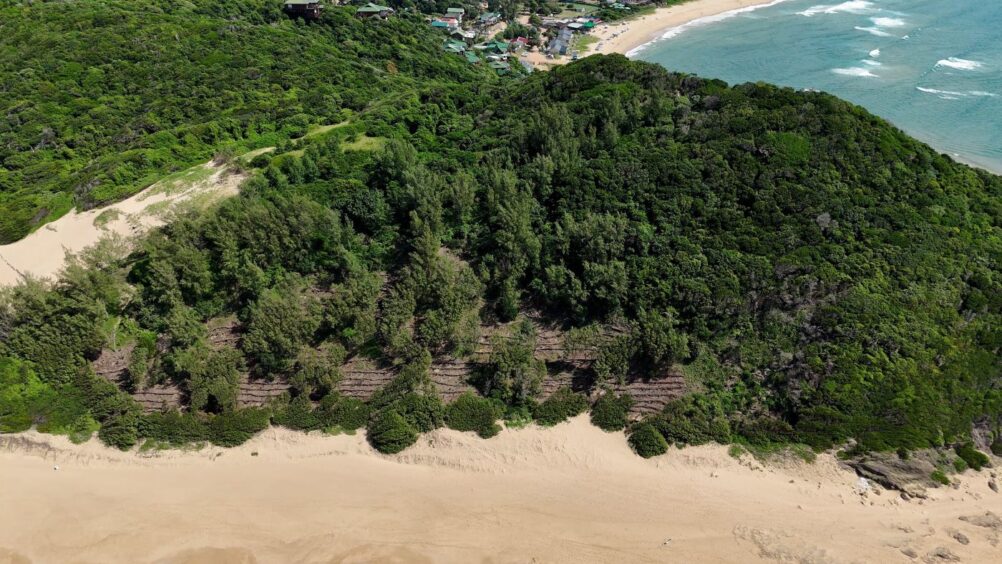
Healthy coastal ecosystems help protect Mozambique’s coastline by buffering communities against erosion and extreme weather, supporting biodiversity, and strengthening resilience to climate change. At Ponta do Ouro, restoring degraded dune systems is helping rebuild these natural processes.
At Ponta do Ouro, local resident Lourenço Matchoco is helping rehabilitate degraded dunes that play a critical role in protecting biodiversity, supporting tourism and shielding coastal communities from erosion and extreme weather.
“The importance of this work is that it will protect the coast and avoid erosion,” he said.
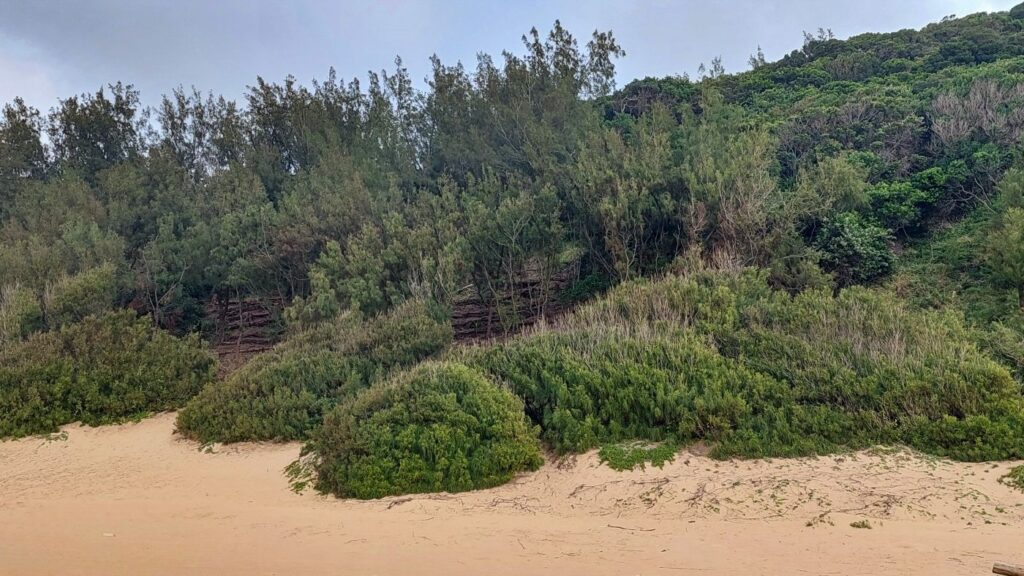
For years, the dunes at one of Mozambique’s most popular tourism destinations, Ponta do Ouro, had been degrading. Casuarina trees planted more than 50 years ago with the intention of stabilising them had instead damaged the indigenous vegetation, establishing a closed canopy that nothing could grow under. Native plants gave way to a forest of casuarina, leaving the dunes unprotected.
Vanishing coastal sanctuaries
In many parts of the world, rising temperatures and sea levels threaten to erode shorelines and damage coastal ecosystems, impacting local communities. Mozambique’s southern coastline – a nesting site for 80% of Mozambique’s endangered and iconic turtle species, loggerheads and leatherbacks – is no exception. Healthy dune systems form part of these wider coastal ecosystems, helping stabilise shorelines while supporting the habitats and ecological processes that both wildlife and people depend on.
“Along the Maputo Bay coastline, we observed that many dunes are being destroyed,” said Clemente Ntauzi, Blue Action Fund Project Manager for Maputo National Park.
Through a partnership between Maputo National Park, Deutsche Gesellschaft für Internationale Zusammenarbeit (GIZ), Blue Action Fund and Peace Parks Foundation, restoration efforts are helping rebuild the natural system that protect both people and nature along Mozambique’s coast.
Restoring natural coastal systems
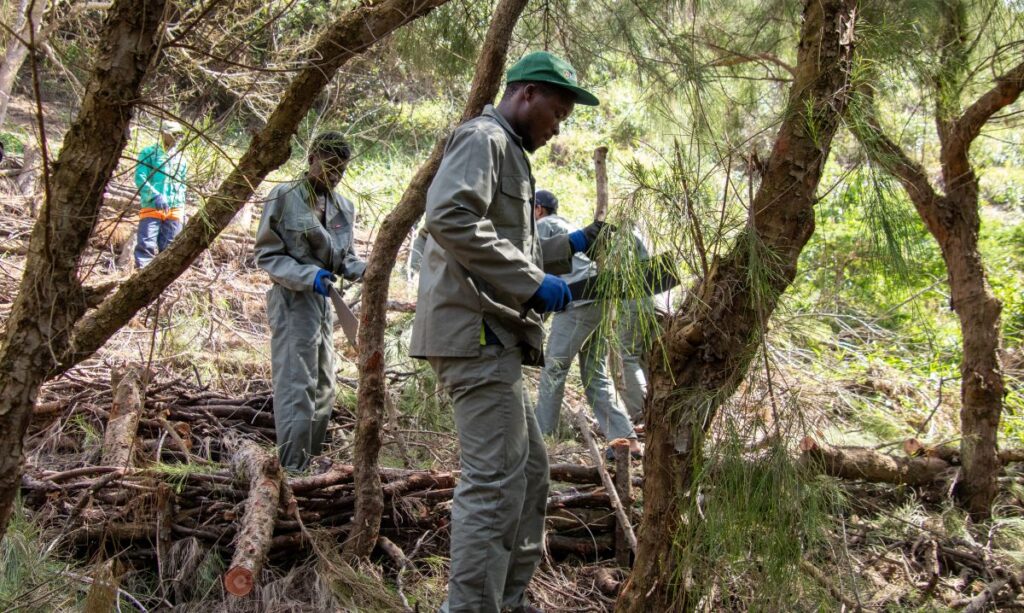
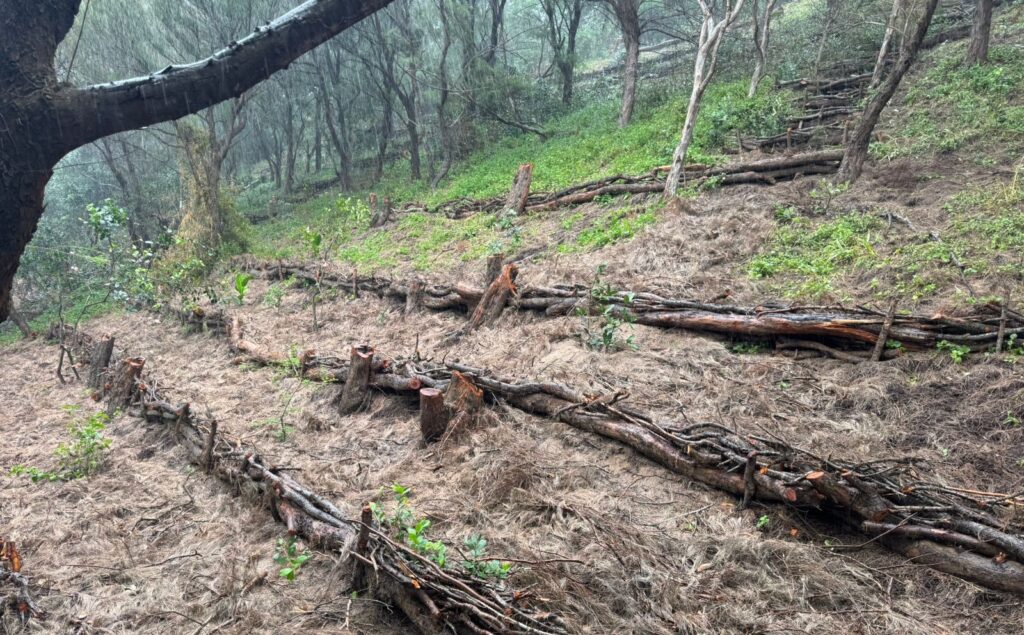
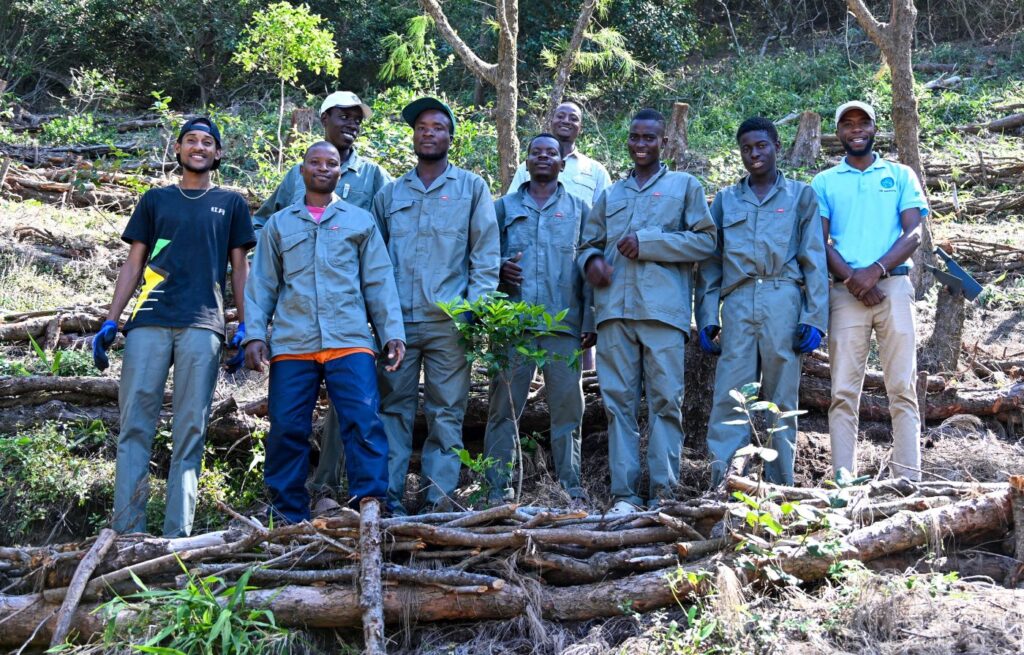
Last year, a project to regenerate Ponta do Ouro’s dune ecosystem began. A workforce of 10 people from the local community was equipped with tools, uniforms and protective gear. The area was divided into 17 planting zones, where the alien trees were selectively removed, leaving enough remaining to protect the new plants from sun, wind and salt spray.
A mix of indigenous dune trees, shrubs and smaller bushy plants were then reintroduced. These include slow-growing coastal forest trees that provide canopy cover and stability. Woody shrubs form dense thickets that protect the soil and create shelter for other species. Low shrubs provide ground cover, preventing erosion.
“With the plants that we are introducing, there will be more birds and bees,” said Matchoco.
A replicable restoration model
Following the success of an initial 400 m² pilot, the programme is now scaling up restoration along the Maputo Bay coastline.
“The completion of the first 400 m² restoration phase demonstrates how targeted interventions, community participation and long-term partnerships can restore degraded coastal ecosystems,” said Gavin Shaw, Peace Parks Foundation’s Head of Operations and Development at Maputo National Park.
The next phase involves removing the remaining invasive species and expanded planting, to improve the habitat quality for native species.
“The two-year project to rehabilitate 9 000 m² section of Ponta do Ouro’s southern beaches will help stabilise them and improve biodiversity. In the long run, it aims to strengthen coastal biodiversity resilience,” said Miguel Gonçalves, Park Warden for Maputo National Park.
Signs of recovery
Early signs of recovery are already visible. Indigenous plants are taking hold, sunlight is reaching them and life is returning to the dunes.
The involvement of the local residents has been key to the project’s success.
“This work cannot succeed without community participation, because this creates ownership and helps ensure long-term conservation,” said Ntauzi.
Matchoco’s efforts have also benefited his family. “Through this job I’m able to help my parents and family,” he said.
Driven by local hands and sustained through strong partnerships, this work is reinforcing one of nature’s shields, protecting both communities and wildlife along Mozambique’s coast.
