

Catastrophic flooding in Mozambique
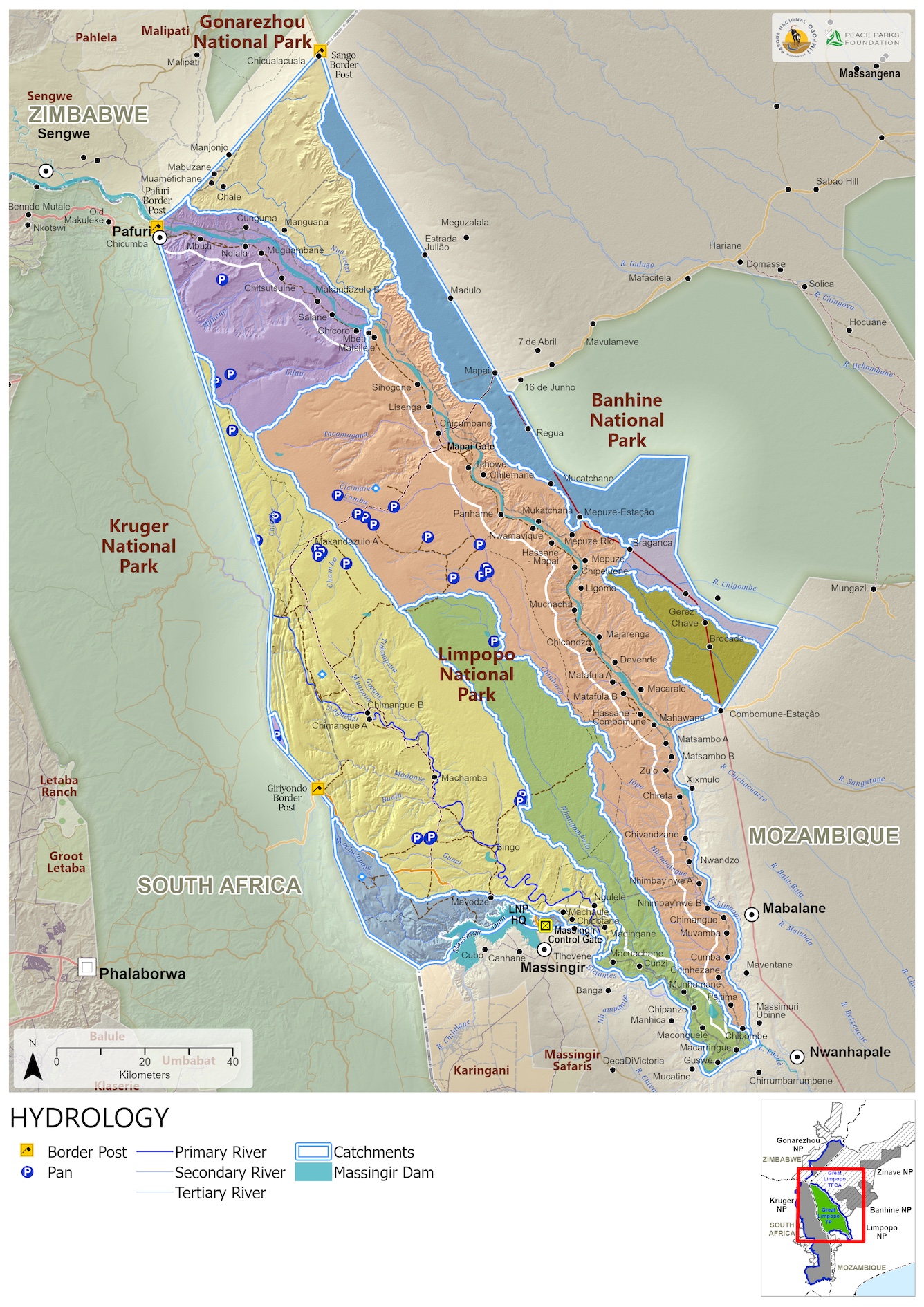
Severe flooding across the Limpopo, Shingwedzi and Olifants river systems has devastated communities living in and around Limpopo, Banhine and Zinave national parks in Mozambique’s Gaza Province. Current assessments indicate that the scale and impact of this flooding are more severe than the major floods of 2000, with widespread destruction of infrastructure, loss of livelihoods and prolonged isolation of affected communities.
Following a declaration of a state of emergency and an appeal for assistance to aid organisations, Peace Parks Foundation is supporting response efforts in coordination with the Mozambique Disaster Relief Agency (INGD), the National Administration for Conservation Areas (ANAC), Karingani, donor and private sector partners and local authorities.
What’s happening
Communities in these areas are highly vulnerable and depend largely on subsistence farming and migrant labour. Cultivation takes place along fertile alluvial riverbanks, and harvests in these areas have been lost. Roads and critical infrastructure have been severely damaged or destroyed, leaving many communities isolated with limited access to services or assistance.
More than 330,000 people across Gaza Province have been affected. Local estimates suggest that 37,000 people around Limpopo, Banhine and Zinave may be severely impacted. While floodwaters have mostly receded, some villages remain cut off in areas still experiencing very high water levels.
How the response is unfolding
Peace Parks Foundation is currently supporting response efforts through a combination of immediate humanitarian assistance, logistics coordination and resource mobilisation, including:
- 12 evacuation flights
- 41 isolated villages reached, bringing food and medical supplies to 3,768 families
- 106 flight hours logged
- 51 tonnes of food and emergency supplies delivered
- 62 tonnes of dry food secured and ready for distribution as access allows
- 80 tonnes of seed ordered for replanting of destroyed crops, with delivery imminent to enable planting within the remaining window for this year’s harvest
- 256 kg of antiretrovirals delivered by helicopter to Chicialacuala hospital
Why support is urgently needed
The immediate concern remains access to food and safe drinking water. With most families having lost their crops, the risk of prolonged food insecurity is significant. In the months ahead, the potential for cholera and malaria outbreaks is anticipated if recovery efforts stall.
Without timely intervention, this humanitarian crisis risks becoming a wider environmental emergency. Prolonged food insecurity and livelihood loss increase pressure on protected areas, raising the risk of wildlife poaching, human–wildlife conflict and long-term ecological damage.
Responding at the scale required will demand significant humanitarian and recovery funding over the coming months.
How you can help
This crisis requires urgent support and sustained action. Immediate and longer-term needs include:
- Short-term food relief to prevent hunger and famine in affected communities
- Seed provision to restore livelihoods and promote self-sufficiency, as crops have been wiped out and the next harvest has been destroyed
- Disease prevention and public health support, with a focus on cholera, malaria and malnutrition
- Prevention of longer-term environmental impacts, as prolonged food insecurity and livelihood loss increase the risk of wildlife poaching, human–wildlife conflict and broader ecological degradation in and around the park.
Your support matters.
