Home › How We Work › Community Development
Community Development
Lasting conservation depends on thriving communities
Protected areas cannot succeed in isolation from the people who live in and around them. Peace Parks works with communities to strengthen local governance, livelihoods and economic opportunity, and to reduce the costs of living alongside wildlife.
Our work focuses on three interconnected areas.
GOVERNANCE
Communities have lived alongside and relied on these landscapes for generations. Their knowledge and priorities are important to how land and natural resources are managed.
Peace Parks works with governments, traditional leaders and community institutions to strengthen local governance and ensure communities have a meaningful role in planning and decisions that affect the land and resources on which they depend.
This helps ensure that communities have a meaningful role in decisions that affect the land and resources on which they depend.
FEATURED PROGRAMMES
INTERNATIONAL CLIMATE INITIATIVE (IKI) GROWING GREENER
At Simalaha Community Conservancy in Zambia, Growing Greener supports climate-smart agriculture, sustainable land use and stronger local governance.
It works through community structures to strengthen decision-making around farming, grazing and natural resources, helping communities manage land more sustainably and build resilience to climate change.
SUSTAINABLE FISHERIES
Healthy rivers and wetlands support both biodiversity and food security.
Protecting rivers and wetlands depends on effective local management. Fisheries committees, communities and government partners work together to protect aquatic resources while strengthening livelihoods.
Community-led stewardship helps safeguard fish stocks, improve compliance and ensure these resources continue to support future generations.
SAFETY, SECURITY AND WELLBEING
People living alongside protected areas can face challenges that affect their safety, wellbeing and livelihoods, from encounters with wildlife to limited access to clean water, education and basic infrastructure.
Peace Parks works alongside governments and communities to address these challenges through practical measures that reduce risk and improve everyday life.
HUMAN-WILDLIFE COEXISTENCE
Living alongside wildlife.
As protected areas recover and wildlife populations grow, people and wildlife increasingly share space in and around protected areas and across the wider landscapes that connect them.
Reducing conflict is essential to protecting both livelihoods and wildlife. Practical measures such as improved livestock management, early-warning and response systems, strategic fencing and community-led land-use planning can help reduce risk. Accessible grievance mechanisms also give communities a formal way to raise concerns and seek resolution.
These approaches help people and wildlife coexist while strengthening trust between neighbouring communities and protected area authorities.
HERDING FOR HEALTH
Healthy livestock begin with healthy rangelands.
Herding for Health works with livestock-keeping communities to improve grazing management, livestock health and the way livestock and wildlife share the landscape.
Through planned grazing, professional herding and stronger local governance, the programme helps restore degraded rangelands, reduce livestock losses, ease pressure on natural resources and support coexistence between people, livestock and wildlife.
CLIMATE-SMART AGRICULTURE
Across many landscapes, communities face increasing pressure from changing rainfall patterns, degraded soils and more frequent droughts.
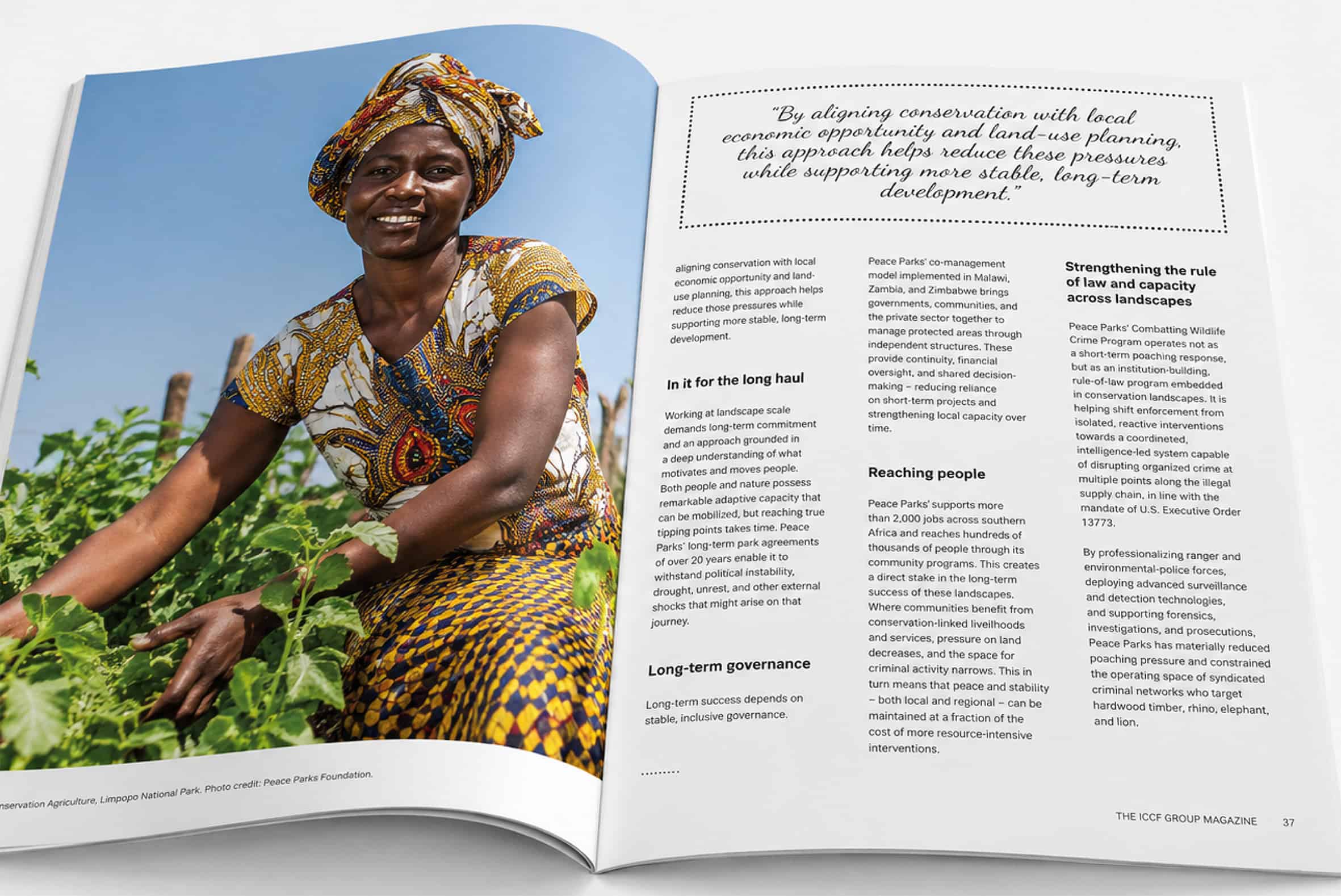
Working with local partners, Peace Parks supports practical approaches that improve agricultural productivity while protecting soil, water and biodiversity. This includes promoting a wider variety of crops to strengthen resilience and improve the nutritional value of what communities grow.
RESILIENCE AND SOCIO-ECONOMIC DEVELOPMENT
For communities living alongside protected areas, earning a reliable income and putting food on the table can be difficult, particularly as changing weather patterns place greater pressure on land and natural resources.
Peace Parks works with communities to strengthen food security and create income opportunities through farming, fisheries, livestock, local enterprise and other activities suited to each landscape.
Stronger livelihoods help families cope with changing conditions while reducing pressure on the natural resources they depend on.
FEATURED PROGRAMMES
BLUE ACTION FUND
In 2022, Blue Action Fund, backed by the Green Climate Fund, awarded Peace Parks a EUR 5.9 million grant to support nature-based solutions in the marine protected areas of Maputo National Park.
Working with communities that depend on these coastal resources, the project strengthens local livelihoods while protecting mangroves, seagrass beds, coral reefs and dunes.
NATURE-BASED ENTERPRISE
Peace Parks supports locally owned businesses linked to conservation, helping create employment, diversify household incomes and strengthen local economies through the sustainable use of natural resources.
Supporting all three pillars
LOCAL LEADERSHIP
Building capacity for the future.
Long-term conservation depends on capable local institutions and strong local leadership.
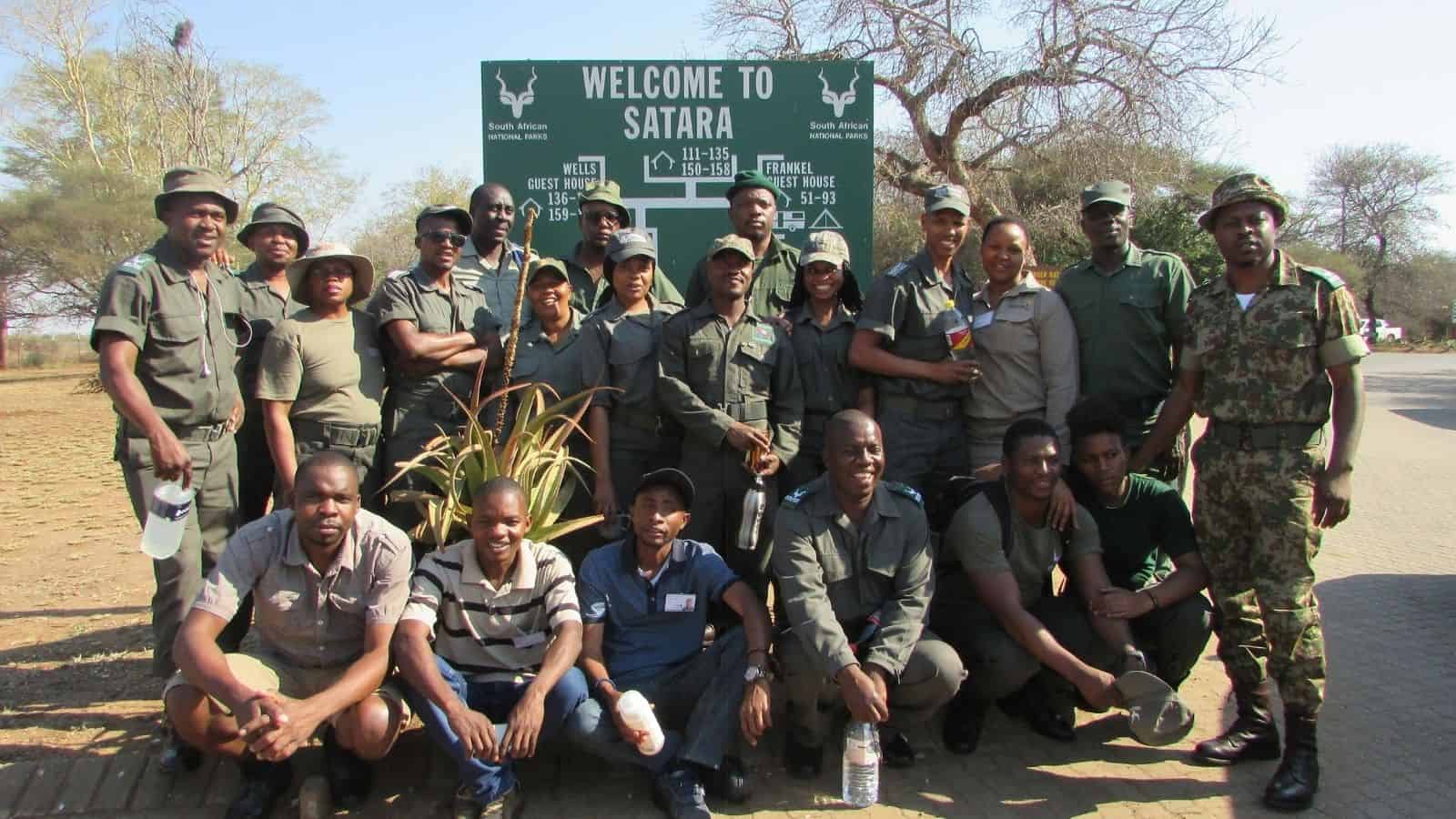
Peace Parks invests in people by strengthening governance, developing professional skills and supporting the next generation of conservation practitioners.
This includes training protected area staff, strengthening community governance structures, supporting community-based conservation, developing local conservation leaders and building partnerships between communities and government agencies.
SOUTHERN AFRICAN WILDLIFE COLLEGE
Building Africa’s conservation workforce.
Recognised by the Southern African Development Community (SADC) as a centre of specialisation for conservation training, the Southern African Wildlife College equips rangers, protected area managers, community practitioners and conservation leaders with the practical skills needed to manage protected areas, strengthen governance and support community-led conservation across Africa.
Enterprise & Tourism
Creating value from healthy landscapes.
Nature-based tourism can create opportunities that extend beyond protected area boundaries. When tourism value chains are locally inclusive, visitors can support accommodation providers, transport services, guides, craftspeople, producers and other small businesses.
Peace Parks works with governments, communities and the private sector to help create the conditions for tourism to contribute to employment, enterprise development and stronger local economies.
When communities experience fair and lasting value from conservation, it can strengthen local support for the landscapes they call home.

SA College for Tourism and TRACKER ACADEMY
Creating pathways into the nature-based economy.
The SA College for Tourism and Tracker Academy prepare young people for careers in hospitality, tourism and conservation, creating opportunities for employment while strengthening the skills needed to support southern Africa’s growing nature-based economy.