Home › How We Work
HOW WE WORK
Protecting landscapes requires long-term management
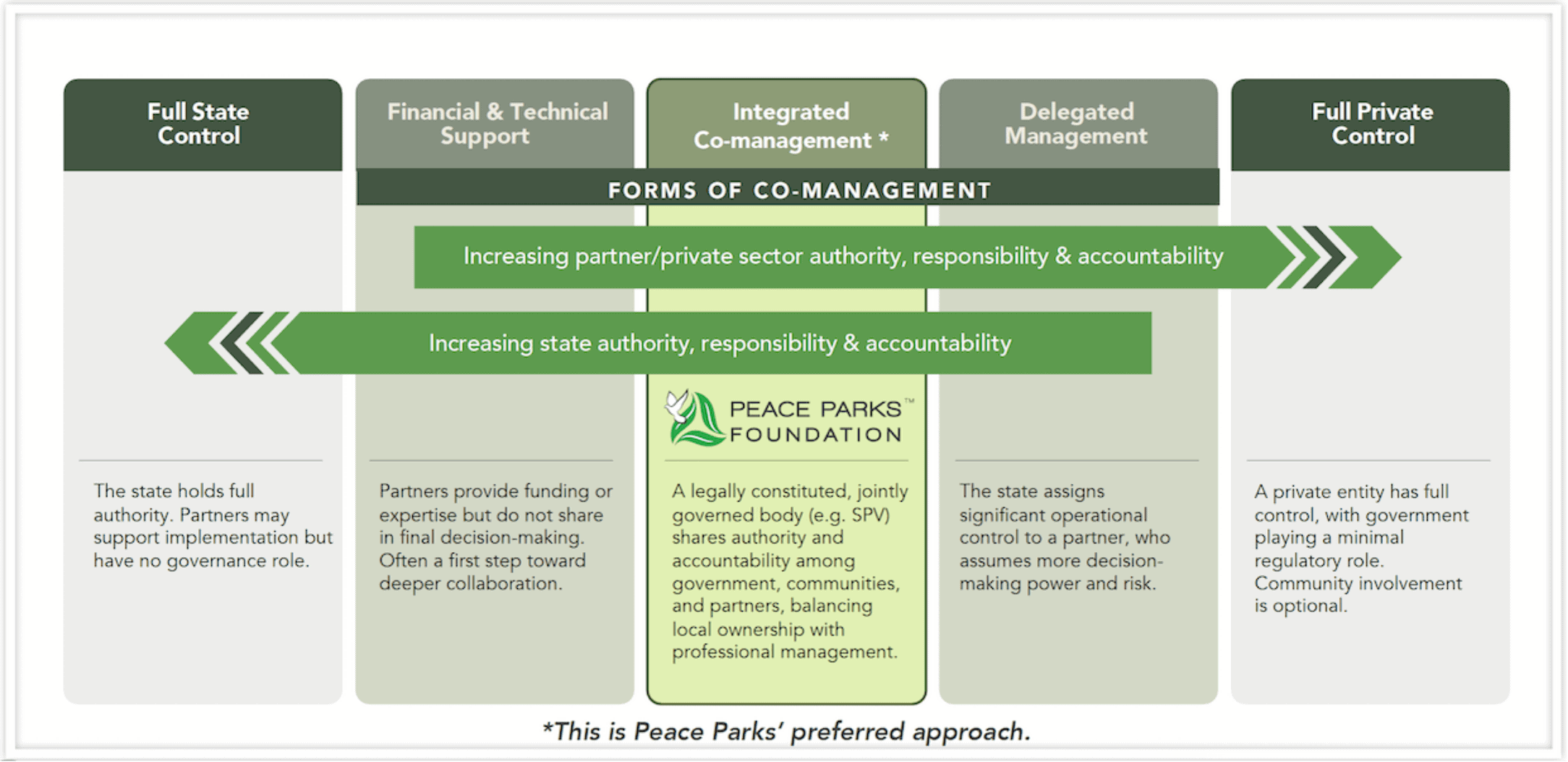
Our preferred model is integrated co-management. A dedicated legal entity is established by the founding partners, including government and Peace Parks, with a clear mandate to manage the protected area. Government retains ownership, sovereignty and statutory responsibilities, while the new institution takes responsibility for day-to-day management and performance.
A non-executive board provides governance and oversight, with decisions made by consensus. A professional management team, led by a CEO, is responsible for implementation. Government and NGO staff working in the protected area are seconded or incorporated into the new institution, creating a unified staffing structure with clear lines of authority and accountability.
Agreed management and business plans guide the long-term management of each protected area.

Government – retains ownership, sovereignty and statutory responsibilities
Board – provides governance and oversight
CEO and management team – responsible for delivery, staff, operations and performance
Why this model
Integrated co-management brings partners together through a legally constituted, jointly governed entity, such as a Special Purpose Vehicle (SPV), combining local ownership with the authority, accountability and professional capacity needed to manage a protected area over the long term.
- clear decision-making and accountability
- coordinated professional management
- continuity beyond individual projects
- national leadership and local capacity
- long-term planning and investment
- confidence among funding partners
Integrated co-management agreements have helped mobilise significant funding for Nyika-Vwaza, Sioma Ngwezi and Greater Mana Pools within months of signature.
Building long-term financial sustainability
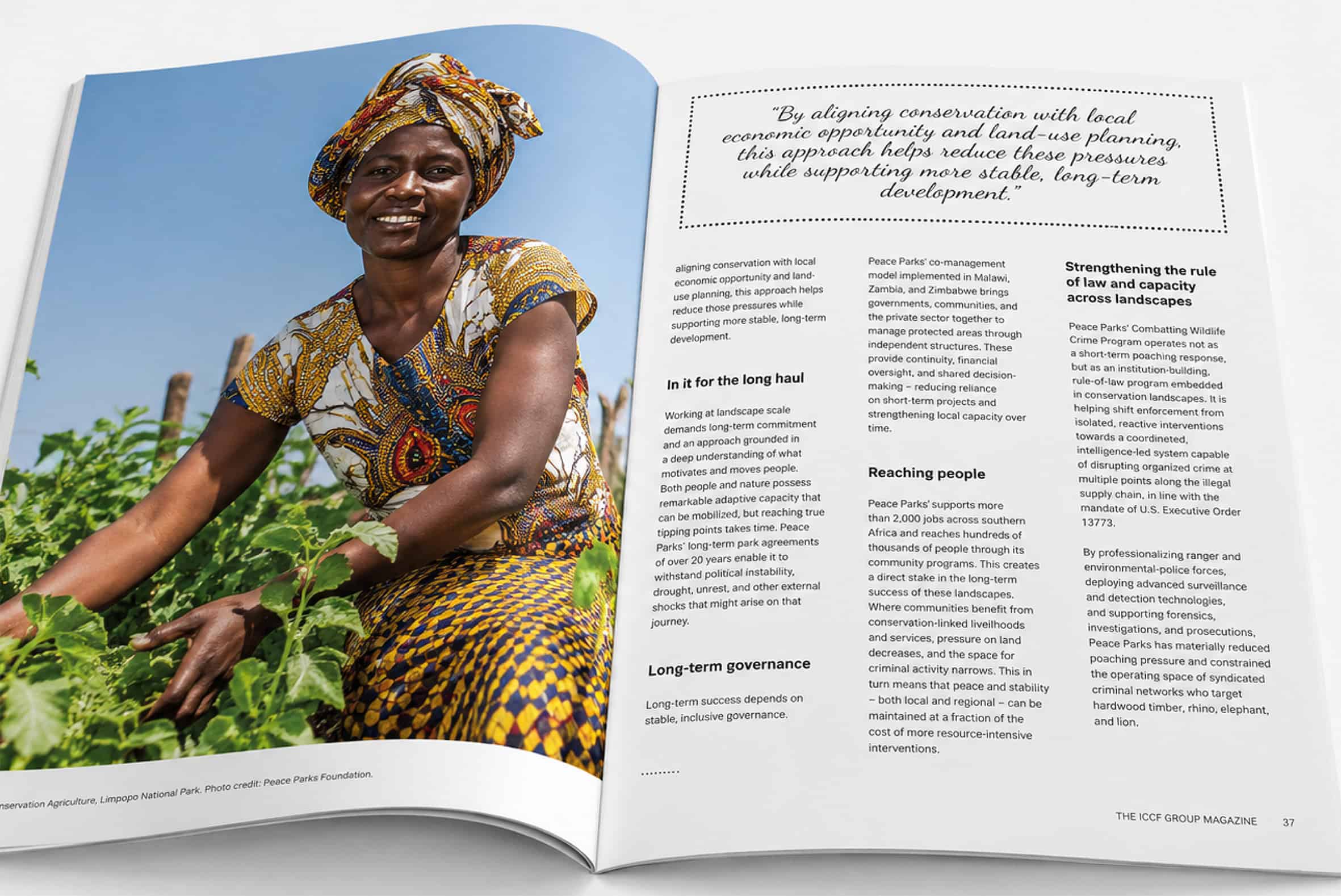
Integrated co-management institutions are designed to operate in perpetuity, providing a foundation for long-term financial stability and, where possible, financial break even.
- Revenue retention: allowing income generated by the protected area to support its ongoing management.
- Accountability and performance management: promoting efficient operations and responsible use of resources.
- Investment security: providing the authority to transact with investors and security of tenure for their investments.
- Innovative financing: creating opportunities to attract new investment and diversify revenue beyond traditional tourism income.
WHAT LONG-TERM MANAGEMENT REQUIRES
Conservation at Scale
Restoring nature across protected areas, ecological linkages and transboundary landscapes.
Community Development
Building shared responsibility, resilience and opportunity around protected areas.
Conservation Finance
Securing the investment and financial foundations required for long-term management.
Integrated
co-management in practice
Established in 2025, the Nyika-Vwaza Trust is a long-term co-management partnership supporting the protection and development of Nyika National Park and Vwaza Marsh Wildlife Reserve in Malawi.
Governed through a shared board structure involving government, communities and conservation partners, the Trust works to strengthen ecological resilience, community partnership and long-term economic and environmental stewardship across one of southern Africa’s most important connected ecosystems.
Stories in Action
Explore how integrated co-management is being put into practice across Southern Africa.