Home › Transfrontier Conservation Areas › Kavango Zambezi
Kavango Zambezi
Transfrontier Conservation Area
The world’s largest land-based transfrontier conservation area
Kavango Zambezi, widely known as KAZA, spans the point at which Angola, Botswana, Namibia, Zambia and Zimbabwe meet. Across approximately 520 000 km², it connects 36 proclaimed protected areas with forests, wildlife management areas, community conservancies and some of Africa’s most important river systems.
Key Facts
Countries
Angola, Botswana, Namibia, Zambia and Zimbabwe
Area
Approximately 520 000 km²
Formal establishment
Treaty signed in 2011
Protected-area network
36 proclaimed protected areas
Defining natural features
The Kavango and Zambezi river basins, including the Okavango Delta and Victoria Falls
History and Establishment
2006
The scale of the idea is tested
Peace Parks appointed to undertake the Kavango Zambezi (KAZA) feasibility study.
7 December 2006
Five countries set a common direction
The partner countries sign a MoU to establish the world’s largest transfrontier conservation area (TFCA) and appoint the KAZA Secretariat to steer its development.
2008
Plans begin to move into practice
MoU signed to commence establishment of TFCA and Peace Parks appointed as implementing agent for German Government Funding
18 August 2011
A vast landscape becomes one
The heads of state of the five partner countries sign the KAZA Transfrontier Conservation Area Treaty during the SADC Summit in Angola.
22 October 2012
Traditional leadership opens new ground
Chief Sekute and Senior Chief Inyambo Yeta establish the Simalaha Community Conservancy, spanning the Sekute and Sesheke chiefdoms.
2013
Wildlife begins to reclaim its range
A rewilding programme is established to develop Simalaha as a tourist destination and re-establish wildlife populations and their migration patterns in KAZA TFCA.
2013
Farming adapts to the landscape
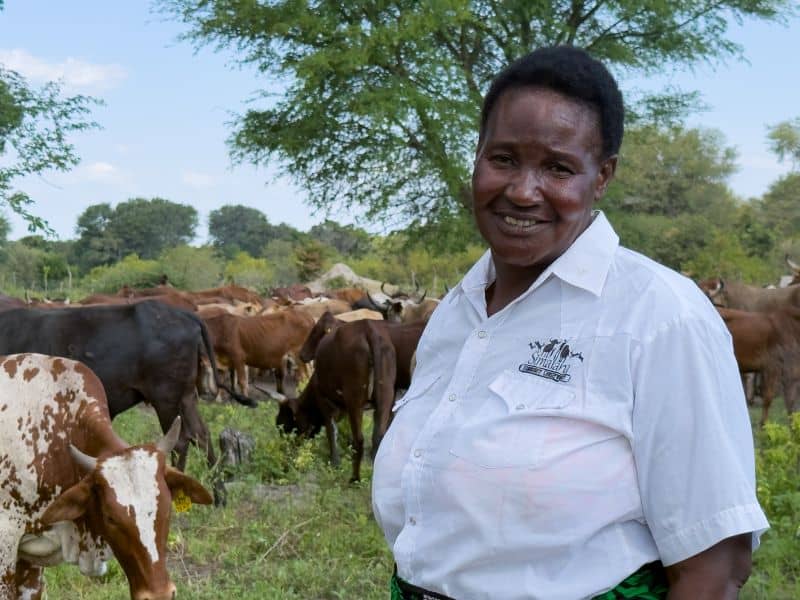
Conservation agriculture projects are launched in Simalaha to ensure food security and improve farming methods.
2014
A wetland takes its place on the world stage
Botswana’s Okavango Delta became the thousandth site inscribed on UNESCO’s World Heritage List.
2014
A hidden journey comes to light
Research by Oryx – The International Journal of Conservation proves that a population of zebra undertake the longest big-mammal migration in Africa along a 500 km round-trip route in an almost direct north-south axis between Namibia and Botswana in KAZA TFCA.
2015
Protection begins to cross borders
Angola, Namibia and Zambia start joint law enforcement operations,which yield good results.
2016
One plan brings five countries together
The KAZA TFCA master integrated development plan (IDP) is approved by the partner countries. Along with the five country IDPs, it guides the development of the TFCA.
8 April 2016
A long-standing relationship is secured
The KAZA Secretariat and Peace Parks Foundation signs a memorandum of understanding to formalise their long-standing cooperation and partnership in the development of KAZA TFCA.
2016
Travel across the landscape becomes easier
The KAZA univisa, first introduced as a one-year pilot project in November 2014, was relaunched in December 2016. The visa allows visitors access to Zambia and Zimbabwe for the duration of one month. It also covers access to Botswana for day trips through the Kazungula border post.
17 December 2021
Presidential support grows
Peace Parks Foundation is honoured to welcome the President of Zambia, His Excellency Hakainde Hichilema, as its newest Patron. In graciously accepting the invitation from Peace Parks, President Hichilema voiced steadfast support for the Foundation’s extensive conservation and community development work in the country.
2023
The institution stands on its own
Peace Parks hands over legal base to KAZA Secretariat to function independently.
2024
A new chapter opens in western Zambia
Historic 20-year multi-party partnership agreement between the Department of National Parks and Wildlife (DNPW) in collaboration with the Barotse Royal Establishment (BRE), Peace Parks Foundation and WWF Zambia, to restore and protect Sioma Ngwezi landscape in Zambia.
Why this landscape matters
KAZA is large enough to support ecological processes that no single protected area or country could secure alone. Six wildlife dispersal areas help connect the landscape’s national parks, conservancies and community lands, allowing wildlife to move across borders and between seasonal ranges.
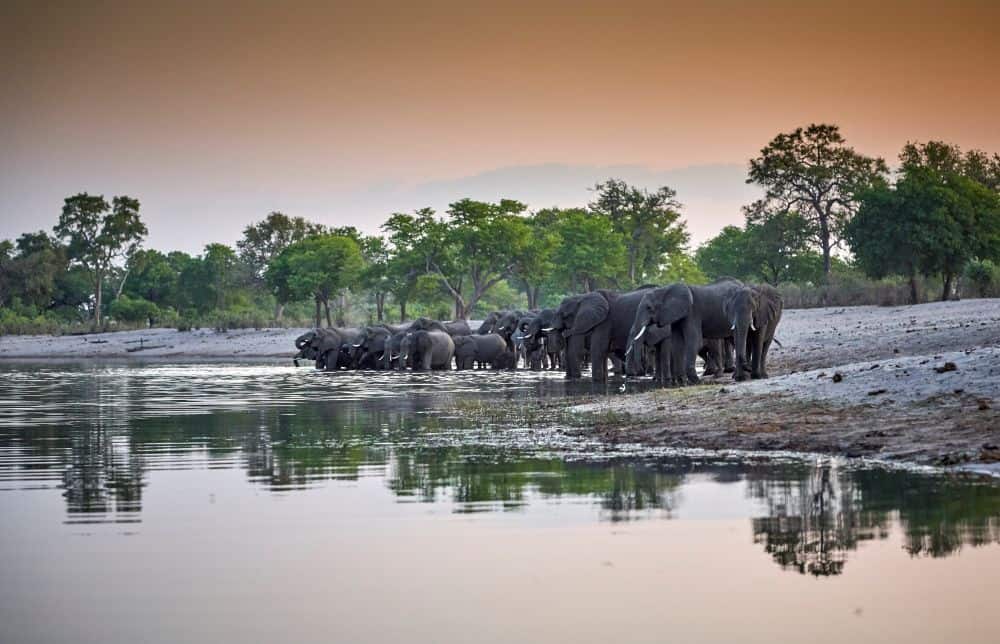
The landscape holds the continent’s largest contiguous elephant population. Along the Kwando River, elephants and other wildlife can still move through largely unfenced areas between Angola, Zambia, Namibia and Botswana. In the Zambezi-Chobe Floodplain, wetlands and community conservation areas provide an important connection between Chobe National Park in Botswana and the wider conservation system extending towards Kafue National Park in Zambia.
KAZA is also home to millions of people. Its long-term future depends on ensuring that conservation contributes to secure land rights, stronger local governance, productive livelihoods and a viable wildlife economy.

Peace Parks’ priority protected areas
Simalaha Community Conservancy, Zambia
Sioma Ngwezi Management Complex, Zambia
BEYOND PROTECTED AREA BOUNDARIES
The spaces between protected areas are part of living landscapes, shaped by the people who call them home and by the wildlife that moves through them. Ecological linkages help keep these landscapes connected across boundaries.
Peace Parks in KAZA
Peace Parks supported the feasibility process, institutional development and agreements that led to the establishment of KAZA. In 2023, the legal base created to support the initiative was handed over to the independent KAZA Secretariat.
Our direct operational work is now concentrated in Simalaha, the Sioma Ngwezi Management Complex and the wildlife dispersal areas associated with them. This includes protected-area management, rewilding, ranger support, land and natural-resource governance, and the development of conservation-based livelihoods.
Work taking place now
- Strengthening long-term management of the Sioma Ngwezi Management Complex
- Restoring wildlife and rangelands in Simalaha
- Securing community land and natural-resource governance across priority dispersal areas
- Building nature-based income through agriculture, livestock, fisheries, tourism and conservation finance
- Supporting cooperation between the countries and institutions responsible for the wider landscape
Latest stories
Publications & Resources
our partners and donors